
Ngorongoro: The Eden of Africa and Cradle of Humanity
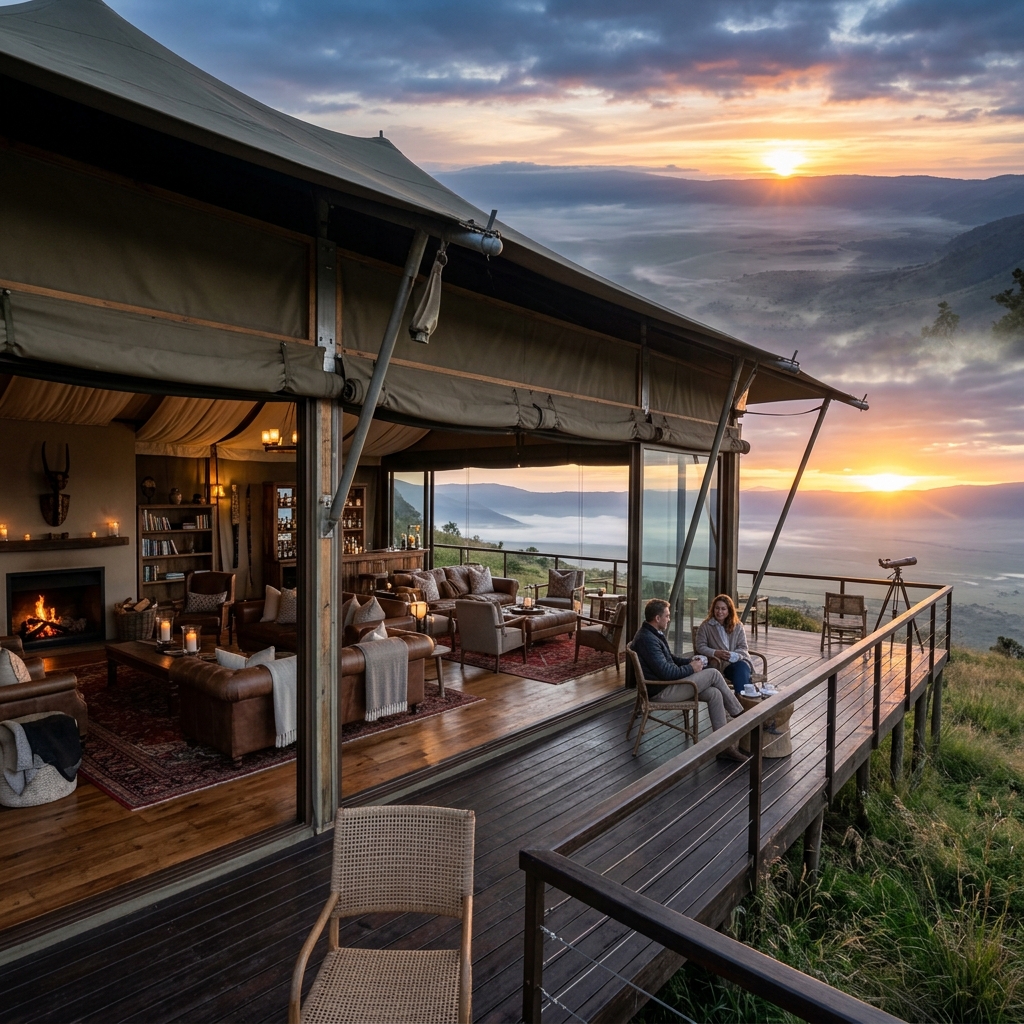
Often referred to as the 'Eighth Wonder of the World,' the Ngorongoro Crater is a geological masterpiece and a sanctuary of unmatched biodiversity. Spanning 260 square kilometers, this intact, inactive volcanic caldera is a self-contained ecosystem—earning its reputation as the true 'Eden of Africa.'
The Big Five and the Rare Rhinos
Ngorongoro is the only crater in Africa where you can spot the entire 'Big Five' (Lion, Leopard, Elephant, Buffalo, and Rhino) within a single day. The crater floor acts as a natural enclosure, sheltering over 25,000 large mammals. Crucially, it hosts a protected population of the critically endangered Black Rhino, alongside rare White Rhinos, roaming the fever tree forests.
Coexistence: Humans and Wildlife
Unlike standard national parks, Ngorongoro is a multi-use conservation area. Here, nomadic Maasai pastoralists live alongside wild lions, leopards, and hyenas. You will witness Maasai warriors herding cattle down the crater slopes to drink, demonstrating a centuries-old harmony between human tradition and wild nature.
The Cradle of Humanity
Beyond its wildlife, Ngorongoro is of monumental historical importance. Located nearby is the Olduvai Gorge, where Dr. Louis and Mary Leakey discovered some of the oldest hominid fossils, including the famous 1.75-million-year-old skull of Zinjanthropus boisei. This region represents the shared ancestral birth home of all mankind.
Static Caldera and Dynamic Shifting Sands
The geography here is a contrast of stability and motion. While the crater floor remains a static, protected haven, the surrounding landscape is highly dynamic. The famous 'Shifting Sands'—dunes of black volcanic ash blown from the active volcano Ol Doinyo Lengai—move slowly across the plains at a rate of 17 meters per year, a mesmerizing display of wind and time.
Birthplace of the Migration and Savanna Cleaners
The short-grass volcanic plains surrounding the crater area act as the calving birthplace of the Great Wildebeest Migration. Between January and March, over half a million wildebeest calves are born here, enriched by the mineral-rich volcanic soil. Circling above are the critical custodians of the savanna health—Vultures. By consuming carcasses, these vital scavengers prevent the spread of diseases, keeping the entire African ecosystem clean and healthy.
"Let Your Imagination Wander."
Smashing Africa ToursAbout Smashing Africa Tours
We write expert travel journals compiled by native safari planners and certified rangers in Arusha, Tanzania, ensuring your holidays are safe, authentic, and unforgettable.