
Serengeti Great Migration Travel Guide: Month-by-Month River Crossings & Calving
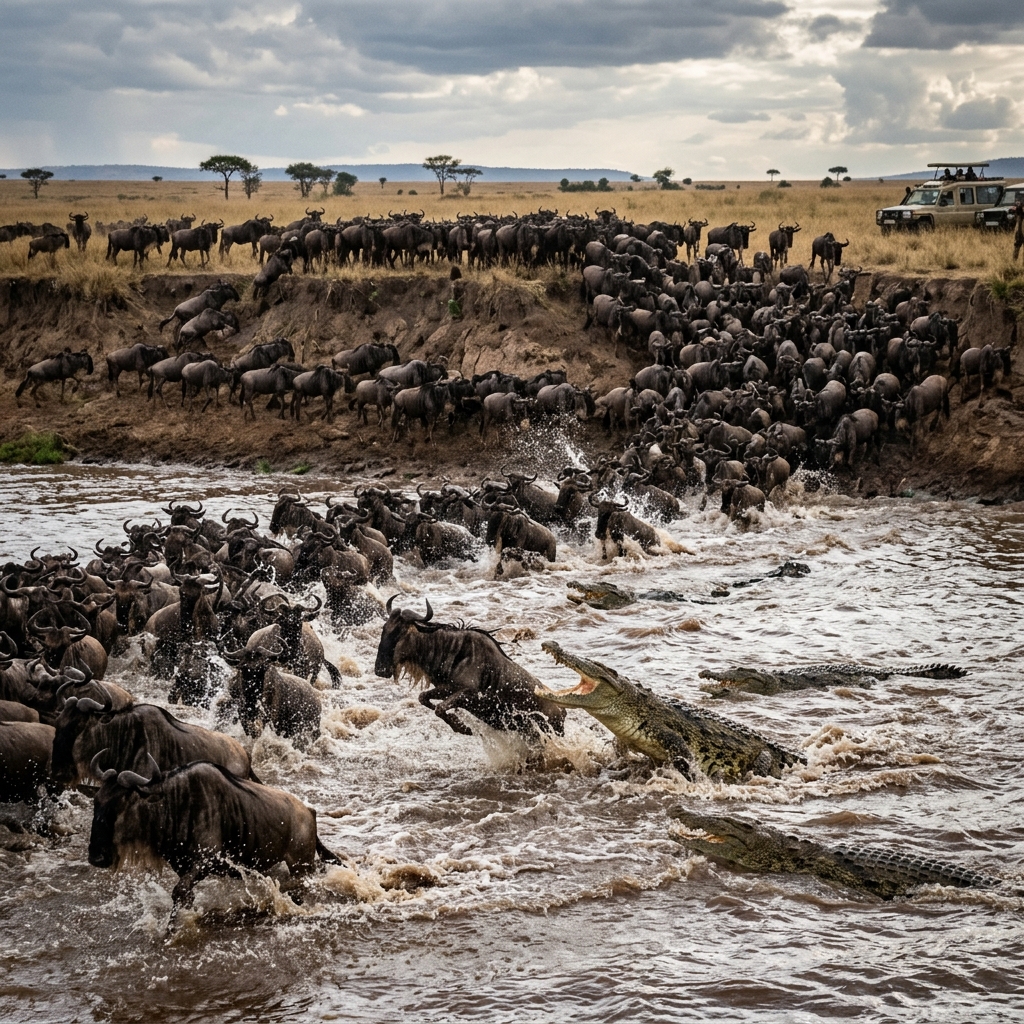
The Great Wildebeest Migration is often called the greatest natural spectacle in the world. Over 1.5 million blue wildebeests, accompanied by 300,000 zebras and Thomson's gazelles, journey continuously across 800 kilometers of the Serengeti-Mara ecosystem in search of green grazing pastures and freshwater. Here is the complete traveler's guide to understanding the migration cycle and positioning your safari cruiser in the right sector of the Serengeti.
The Migration Cycle: Month by Month
January to March: Southern Serengeti & Ndutu Calving Season
The mega-herds gather on the mineral-rich volcanic plains of southern Serengeti and Ndutu. Enriched with calcium from ancient volcanic eruptions of Ol Doinyo Lengai, this sweet grass supports pregnant female wildebeest. In February, up to 500,000 calves are born within a concentrated few weeks. The concentration of vulnerable newborns attracts lions, cheetahs, leopards, and hyenas. This is the prime season for high-adrenaline predator interactions.
April to May: The Rut & Movement to the Western Corridor
As the southern grasses dry out, the herds move northwest into the Western Corridor near the Grumeti River. During this period, the annual breeding rut occurs: bulls clash horns fiercely for dominance, filling the air with guttural calls. The first river crossings take place at the Grumeti River, home to enormous 5-meter Nile crocodiles.
July to October: The Iconic Northern Mara River Crossings
By mid-July, the migration reaches the northern Serengeti and the Kogatende sector bordering Kenya's Maasai Mara. Here, the herds face their greatest challenge: plunging down steep cliff banks and crossing the surging waters of the Mara River. Giant crocodiles lie in wait, while big cats patrol the opposite riverbank. Patience is essential—herds can assemble on the riverbanks for days before a single brave wildebeest leaps in, triggering a stampede of thousands across the water.
November to December: Returning South for the Rains
With the arrival of the short rains in late October and November, the herds head back south through Lobo and the eastern Serengeti, returning to the southern plains by late December to begin the miraculous cycle once again.
Where to Stay to Follow the Migration
Because the herds move continuously throughout the year, staying at a semi-permanent mobile tented camp is the most strategic option. Operators move these luxury canvas camps two to three times a year to remain within 20 to 30 minutes of the active herds. Staying inside a mobile camp ensures you are first on the scene at sunrise game drives without spending hours traveling on transfer roads.
Essential Migration Safari Tips
- Book at Least 6 to 9 Months in Advance: Northern Serengeti camps during the July–October river crossing window fill up nearly a year ahead of time.
- Spend at Least 3 to 4 Nights in the Park: The herds do not cross the river on a fixed schedule. Giving yourself multiple days increases your chances of witnessing a dramatic crossing.
- Pack High-Zoom Optics: Bring binoculars (8x42 or 10x42) and a camera with a telephoto zoom lens (minimum 300mm to 600mm) to capture action shots safely from the cruiser roof.
Discover our dedicated 5 Days Great Migration Explorer package or contact our native safari guides at Smashing Africa Tours to track the migration in 2026/2027.
"Let Your Imagination Wander."
Smashing Africa ToursAbout Smashing Africa Tours
We write expert travel journals compiled by native safari planners and certified rangers in Arusha, Tanzania, ensuring your holidays are safe, authentic, and unforgettable.