
What I Wish I Knew Before Visiting Tanzania For Safari
Few travel experiences match the anticipation of preparing for your first Tanzania safari. The prospect of watching a pride of lions stalking across the golden savannah, witnessing hundreds of thousands of wildebeest plunging across crocodile-filled rivers, or waking to birdsong on the rim of an ancient volcanic caldera captivates international travellers from across the globe.
Yet, stepping into the African wilderness is unlike any holiday in Europe, North America, or Australasia. The logistics are complex, the distances are substantial, and the difference between an exhausting journey and a transformative expedition often hinges on details that rarely appear in glossy holiday brochures.
At Smashing Africa Tours, our team of native Tanzanian guides and safari designers based in Arusha spend every week navigating these vast landscapes. We frequently welcome guests who arrive with common misconceptions: assuming the Great Migration happens in a single afternoon, packing wardrobes of dark blue clothing only to discover tsetse flies, or attempting to squeeze four remote national parks into a frantic four-day drive.
To help you design the journey of a lifetime with clarity and confidence, here is the honest, practical guidance on what you truly need to know before visiting Tanzania for a wildlife safari.
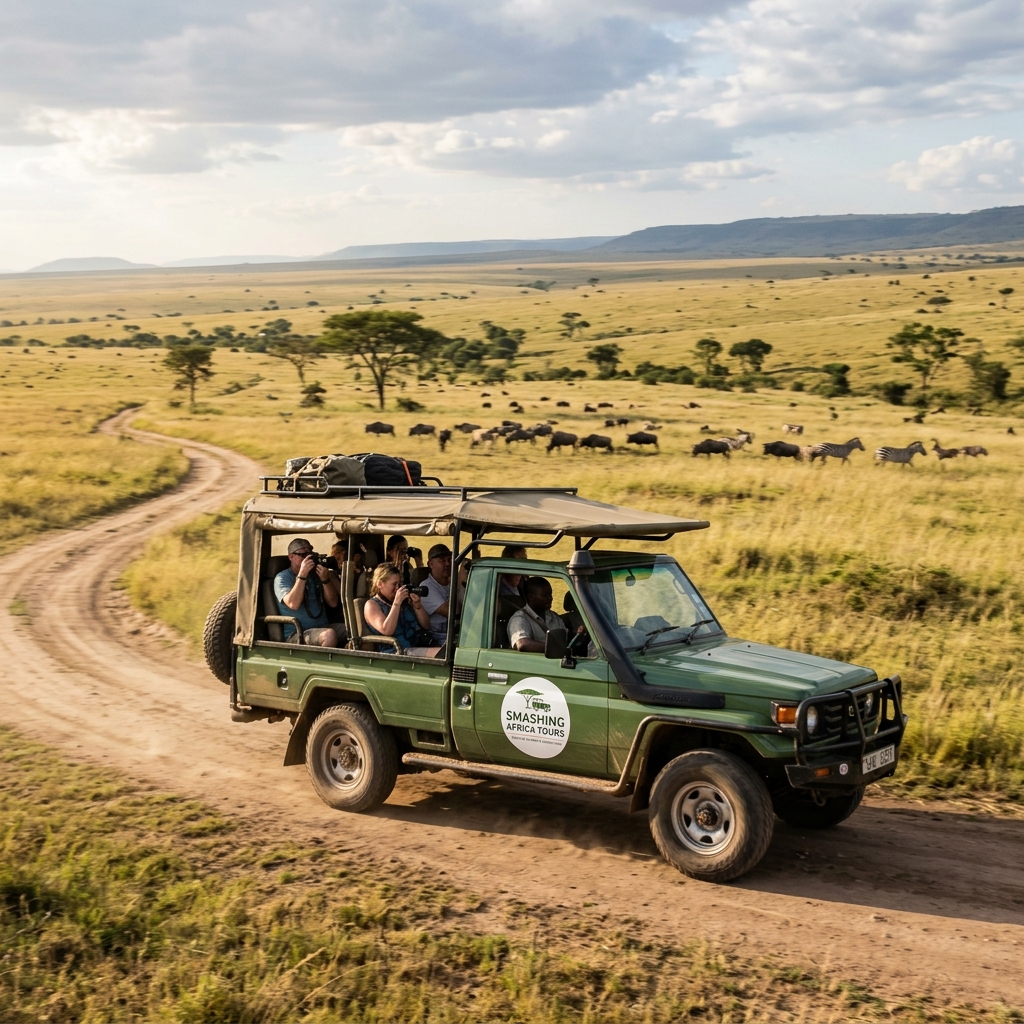
A custom extended 4x4 Land Cruiser traversing northern Tanzania's savannah.
1. Understanding Tanzania’s Geographical Scale: Distances Deceive
The first reality that catches international visitors off guard is Tanzania’s sheer geographical scale. Covering nearly 950,000 square kilometres, Tanzania is larger than France and Germany combined. Its protected wilderness areas alone encompass more land than many European countries.
When looking at a map of East Africa, the distance between the safari gateway town of Arusha and the northern boundary of the Serengeti may look modest. In reality, it involves traversing hundreds of kilometres across tarmac, graded gravel, and rough dirt tracks that wind through volcanic highlands and vast plains.
The Northern Safari Circuit vs. Southern and Western Wilderness
- The Northern Circuit: Home to iconic destinations including the Serengeti, Ngorongoro Crater, Tarangire, and Lake Manyara. This is the premier circuit for first-time visitors, boasting extraordinary wildlife concentrations, established infrastructure, and accessible road networks.
- The Southern Circuit: Comprising Nyerere National Park (formerly Selous) and Ruaha National Park. These remote reserves offer raw, uncrowded river safaris and walking expeditions, best explored via light aircraft.
- The Western Circuit: Encompassing Katavi and the forested slopes of Mahale Mountains on Lake Tanganyika, famous for wild chimpanzee trekking.
Driving Safaris vs. Fly-in Bush Flights
For a Northern Circuit safari, you can choose between a complete overland driving circuit or a "fly-in" combination. Driving offers an intimate appreciation of changing landscapes, rural villages, and highland escarpments. However, driving continuously from the central Serengeti back to Arusha requires seven to eight hours on bumpy roads.
Opting to fly one way—taking a light aircraft from a bush airstrip such as Seronera or Kogatende back to Arusha or onward to Zanzibar—saves an entire day of strenuous driving, leaving you refreshed for the next leg of your holiday.
2. Choosing Your Parks: Distinct Landscapes and Wildlife Concentrations
First-time visitors often assume that all African savannahs look alike. In Tanzania, each national park possesses a distinct geological character, microclimate, and ecosystem. Crafting a balanced Tanzania safari itinerary requires understanding how these parks complement one another.
Tarangire National Park: Elephants and Colossal Baobabs
Located two hours southwest of Arusha, Tarangire National Park is famous for two defining features: ancient baobab trees that dominate the ridges, and the highest concentration of African elephants in East Africa. During the dry months, the Tarangire River serves as the sole permanent water source for miles, drawing herds of up to three hundred elephants alongside zebras, wildebeest, buffaloes, and fringe-eared oryx.
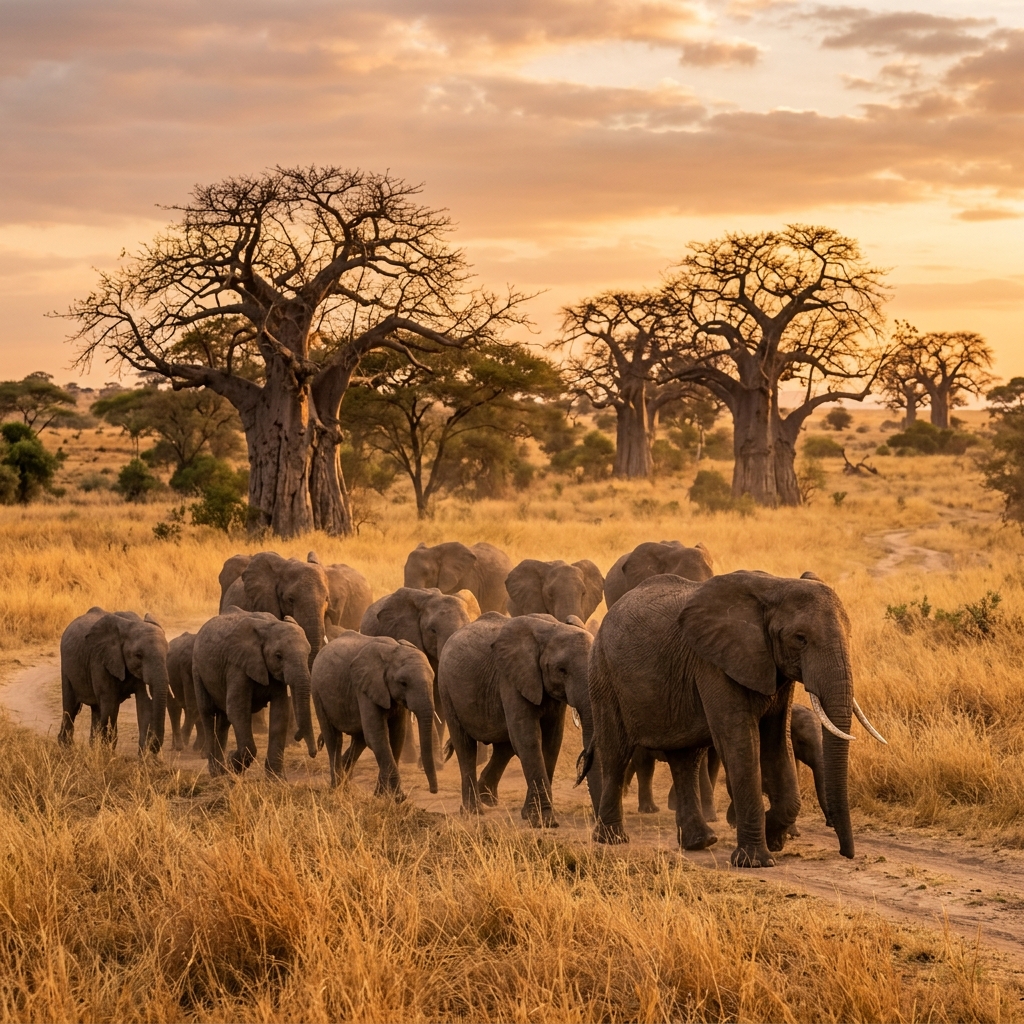
Elephant family feeding beneath towering ancient baobabs in Tarangire National Park.
Lake Manyara National Park: Groundwater Forests and Avian Life
Tucked beneath the sheer red cliffs of the Great Rift Valley escarpment, Lake Manyara National Park offers dramatic scenic diversity in a compact area. You enter through a lush groundwater forest fed by underground springs, home to troops of olive baboons and blue monkeys, before opening onto the alkaline lake shore where thousands of lesser flamingos tint the shallows pink. Manyara is also renowned for its tree-climbing lions and hippo pools.
Ngorongoro Crater: The World’s Greatest Wildlife Amphitheatre
The Ngorongoro Crater is a geological marvel—an unbroken, unflooded volcanic caldera spanning 260 square kilometres. Descending six hundred metres down the forested crater walls brings you onto a self-contained caldera floor supporting approximately 25,000 large mammals. It offers your highest probability in East Africa of encountering the endangered black rhinoceros, alongside dense prides of black-maned lions, spotted hyenas, and massive bull elephants roaming the Lerai forest.
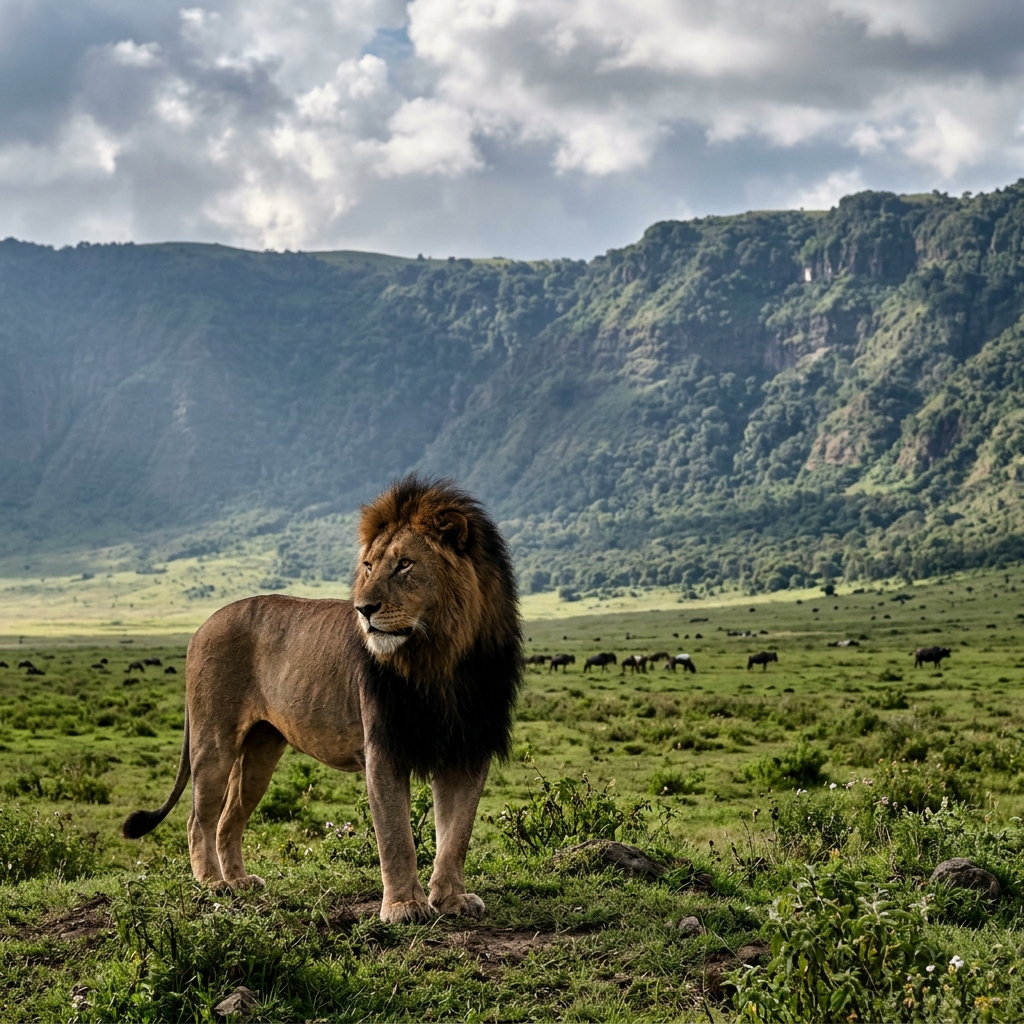
The sweeping landscape of the Ngorongoro Crater caldera floor.
Serengeti National Park: Boundless Savannah and Big Cats
The Maasai named this expanse Siringit—"the place where the land runs on forever." Spanning nearly 15,000 square kilometres, Serengeti National Park is the undisputed crown jewel of African wildlife reserves. From the granite rock outcrops (kopjes) where leopards drape themselves across fig branches to the endless open grasslands roamed by cheetahs and lions, the Serengeti delivers the classic African wildlife safari experience.
3. Decoding Tanzania’s Safari Seasons: When is the Best Time to Visit?
Choosing the best time to visit Tanzania depends on what you wish to experience, your tolerance for dust or rain, and your budget. Tanzania sits just south of the equator, meaning temperatures remain pleasant throughout the year, but rainfall dictates wildlife movements.
| Season | Calendar Months | Wildlife Highlights | Travel Conditions |
|---|---|---|---|
| Peak Dry Season | Late June to October | Animals congregate at rivers; Mara River crossings; highest predator visibility | Cool mornings, dry roads, sunny skies; higher visitor numbers |
| Calving / Green Season | January to March | 8,000 wildebeest calves born daily in Southern Serengeti/Ndutu; intense predator activity | Lush green scenery, warm days, exceptional birdwatching, moderate crowds |
| Short Rains | November to December | Fresh grazing emerges; herds move south; clear skies between afternoon showers | Occasional brief rainstorms; vibrant photography; excellent value |
| Long Rains | April to May | Intimate wildlife encounters; dramatic skies; low camp rates | Heavy showers, muddy tracks, some seasonal tented camps close |
4. Demystifying the Great Wildebeest Migration
One of the most persistent safari myths is that the Great Wildebeest Migration is a single, one-off event that happens in August. In truth, the migration is an unceasing, year-round circular journey undertaken by 1.5 million wildebeest, 250,000 zebras, and hundreds of thousands of gazelles across the Serengeti-Mara ecosystem.
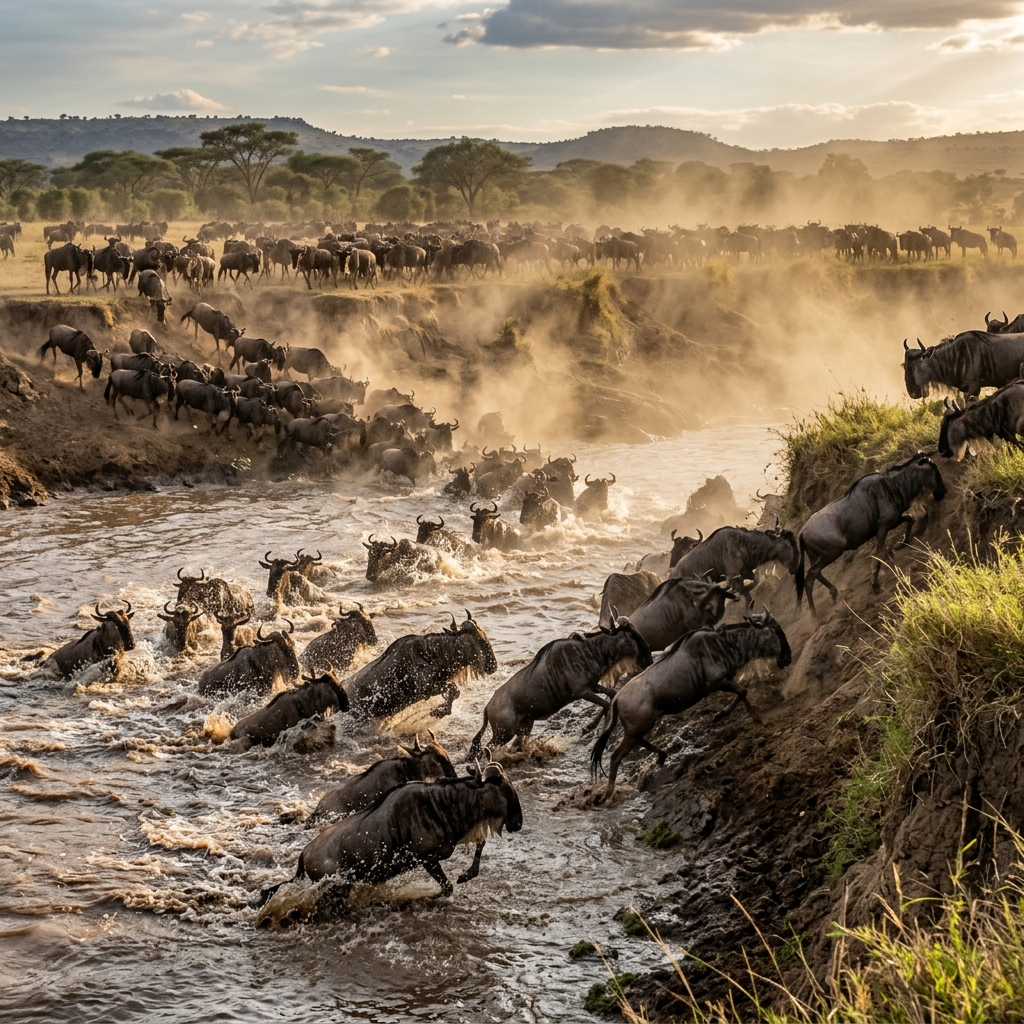
Massive herds braving the Mara River during the northern Serengeti migration crossing.
The herds are perpetually in motion, driven by rainfall, phosphorus-rich grasses, and surface water:
- January to March (Southern Serengeti & Ndutu): The herds graze on nutrient-dense volcanic soils, calving and nursing their young.
- April to June (Central & Western Serengeti): The herds gather into immense columns stretching over forty kilometres, moving northwest through the Western Corridor and facing large Nile crocodiles at the Grumeti River.
- July to October (Northern Serengeti): The animals reach the Mara River along the Kenyan border, plunging into surging waters in one of nature’s most dramatic spectacles.
- November to December (Eastern Serengeti): With the onset of the short rains, the herds turn southward across Lobo and the eastern plains, returning to the southern cradle to begin the cycle anew.
Because migration movements rely entirely on rainfall patterns rather than human calendars, an experienced local operator such as Smashing Africa Tours positions your camps in the precise sector of the Serengeti where the herds are active during your travel dates.
5. How Many Days Should You Allocate for a Safari?
First-time visitors often try to save time or money by booking a three-day whirlwind tour. Almost universally, those travellers express regret that they spent more time driving between park entrance gates than observing wildlife.
To truly immerse yourself in the wilderness without feeling rushed:
- 3 to 4 Days (Taster Safari): Sufficient only for Tarangire, Lake Manyara, and the Ngorongoro Crater. This duration does not allow adequate time to reach the Serengeti by road without spending entire days in transit.
- 5 to 7 Days (The Classic Northern Circuit): The ideal sweet spot for first-timers. This timeframe permits two nights in Tarangire or Manyara, two to three nights in the Serengeti, and a dedicated full-day descent into the Ngorongoro Crater.
- 8 to 10 Days (Comprehensive Safari & Cultural Immersion): Allows you to explore multiple sectors of the Serengeti (such as Central Seronera plus Northern Kogatende), add Lake Eyasi for cultural encounters, and enjoy a relaxed pace with morning and afternoon game drives.
- 10 to 14 Days (Bush to Beach): Combines a comprehensive Northern Circuit safari with a short domestic flight to the tropical spice island of Zanzibar for relaxation.
6. The Anatomy of a Safari Day: What Daily Life Actually Looks Like
Safari life follows the ancient circadian rhythm of African wildlife. Animals do not follow office hours; they are most active during the crisp, cool hours of dawn and dusk, resting deep in the shade during the sweltering heat of midday.
- 05:30 – The Dawn Awakening: Your camp attendant gently knocks on your tent canvas with a thermos of hot Tanzanian coffee, tea, and fresh biscuits. Dressing in warm layers, you step outside into the crisp morning air as the horizon begins to blush orange.
- 06:15 to 11:30 – The Morning Game Drive: Departing camp at first light offers prime viewing. This is when apex predators—lions returning from a night hunt, leopards descending from their roosts, and cheetahs scanning the plains from termite mounds—are on the prowl. Mid-morning, your guide sets up a table in the bush for a warm breakfast surrounded by roaming zebras.
- 12:00 to 15:00 – Midday Repose: During peak heat, animal activity slows. You return to camp or lodge for a three-course lunch, followed by a shower, time to read or edit photographs on your private veranda, and a well-deserved siesta.
- 15:30 to 18:30 – Golden Hour Game Drive: As temperatures drop, the savannah reawakens. The late afternoon light bathes the acacia trees in warm amber tones, creating exceptional conditions for photography.
- 19:00 to 21:30 – Sundowners, Fireside Stories, and Dinner: Back at camp, guests gather around the boma (campfire) with a gin and tonic or local beer to swap stories under the Southern Cross constellation before sitting down to a hearty dinner prepared with fresh local produce.
7. Why Professional Guides and 4x4 Vehicles Make or Break Your Safari
You can book the most luxurious five-star tented suite in Africa, but if your guide lacks expertise or your vehicle breaks down on a remote trail, your safari will fall short.
A knowledgeable safari guide is far more than a driver; they are a naturalist, tracker, cultural ambassador, mechanic, and storyteller. An experienced guide understands micro-habitats, interprets alarm calls from baboons or guinea fowl to pinpoint hidden predators, and positions the vehicle safely so photographers have the best lighting angles without disturbing animal behaviour. At Smashing Africa Tours, all our guides are licensed native Tanzanians certified through professional national guide associations.
Furthermore, Tanzania’s rugged backcountry demands purpose-built machinery. Our custom safari 4x4 Land Cruisers feature full-length pop-up roof hatches for 360-degree viewing, high-clearance suspension, individual 220V power inverters and USB ports at every seat, and an onboard electric cooler box stocked with chilled drinking water.
8. Demystifying Safari Costs: Where Does the Money Go?
First-time visitors often wonder why Tanzania safari tours carry higher price points compared to holidays in Southeast Asia or South America. The answer lies in the heavy conservation infrastructure required to protect these vast ecosystems.
When you book an authentic, all-inclusive safari package, your investment covers extensive statutory fees that directly protect Tanzania’s wildlife heritage:
- Park Entry & Conservation Fees: Daily conservation tariffs charged by TANAPA and NCAA ($70 to $85+ per adult per 24 hours).
- Crater Descent Fees: Entering the floor of the Ngorongoro Crater incurs a dedicated vehicle descent fee of nearly $300 to manage vehicle density.
- Government Taxes: A mandatory 18% Value Added Tax (VAT) applies to all tourism services and park admissions across Tanzania.
- Wilderness Concession Fees: Lodges inside national parks pay nightly concession and bed levies to support surrounding conservation initiatives.
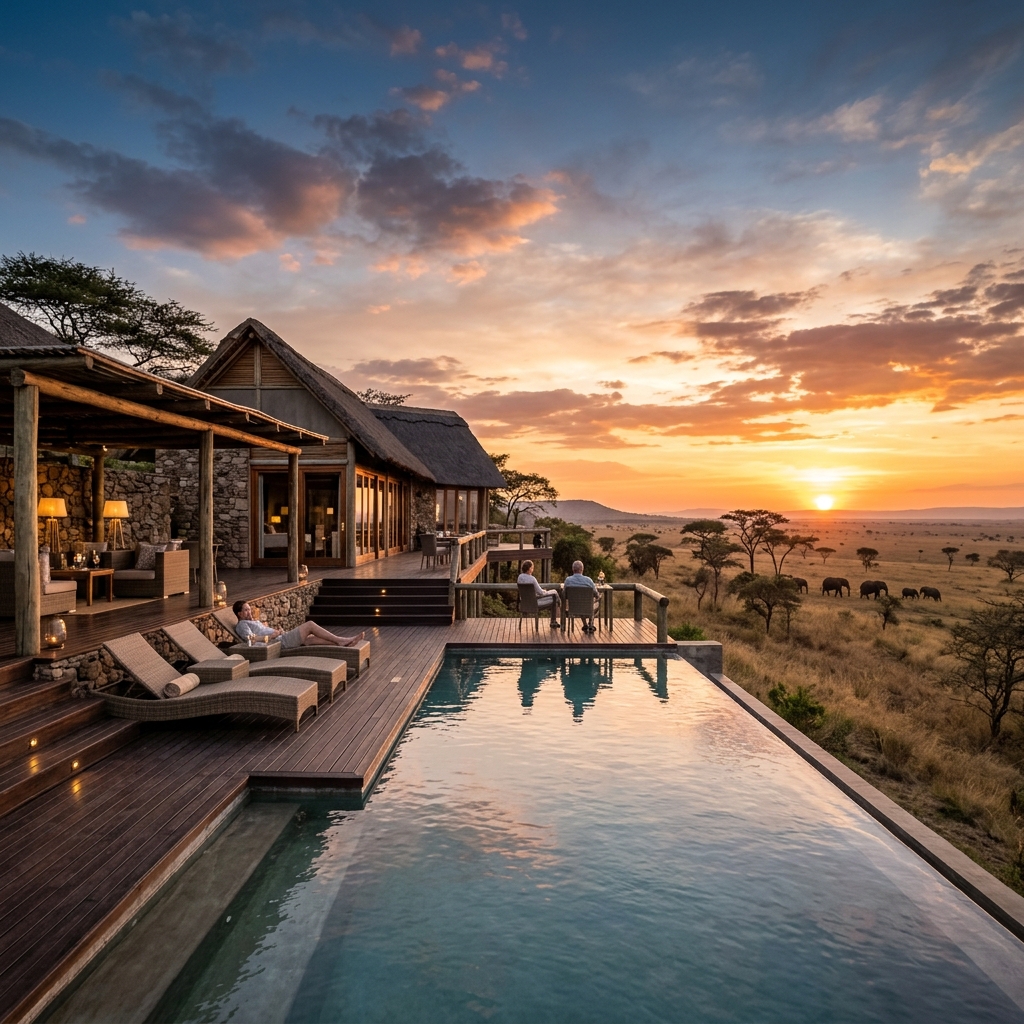
Comfort and elegance blend seamlessly with pristine African wilderness.
For a full transparent breakdown of operational fees and budget planning, explore our dedicated guide to Tanzania Safari Costs & Pricing.
9. Essential Packing Advice: Practicality Over High Fashion
Packing for an African safari requires balancing comfort, changing temperatures, and strict airline weight limits.
The Neutral Wardrobe Rule
Avoid bright colours (reds, yellows, and neons) which can startle nervous wildlife. More crucially, strictly avoid dark navy blue and black clothing. In acacia savannahs and woodland river corridors, dark blue and black attract tsetse flies, which deliver a painful bite. Choose loose, breathable cotton or linen clothing in muted neutral tones: khaki, olive green, stone, tan, and soft beige. Do not wear military camouflage patterns, which are illegal for civilians in Tanzania.
Layering for Extreme Temperature Swings
While afternoons in the Serengeti often reach 28°C (82°F), morning game drives on the rim of the Ngorongoro Crater (at 2,200 metres altitude) frequently plunge to 5°C (41°F). Bring a warm fleece jacket, windbreaker, or lightweight down jacket, alongside a light scarf, beanie, and warm socks.
Luggage Restrictions
If your itinerary includes domestic light aircraft flights between the Serengeti, Arusha, or Zanzibar, luggage is restricted to 15 to 20 kilograms per passenger in soft-sided duffel bags. Hard-shell suitcases cannot fit into the narrow cargo pods of Cessna Grand Caravans. Most safari lodges offer complimentary or low-cost daily laundry services, allowing you to pack light.
10. Wildlife Photography and Responsible Viewing Ethics
You do not need to be a National Geographic photojournalist to capture stunning images on a Tanzania wildlife safari, but having the right mindset and equipment transforms your results.
- Photography Equipment: Use a DSLR or mirrorless camera body paired with a telephoto zoom lens (such as a 70–200mm, 100–400mm, or 150–600mm). Bring extra memory cards and spare batteries; cold mornings drain lithium batteries quickly.
- Respect Boundaries: Never encourage your driver to drive off-road in restricted zones. Driving off marked tracks crushes fragile native grasses, causes soil erosion, and disrupts animal hunting patterns.
- Maintain Silence: Keep your voice low when approaching animals. Shouting or clapping to make a resting lion look up causes unnecessary stress and alters natural behaviour.
- No Feeding or Littering: Never feed baboons, birds, or rodents near picnic sites; habituating animals to human food leads to aggression and eventual culling.
11. Combining Safari with Kilimanjaro, Culture, and Zanzibar
One of Tanzania’s greatest strengths as a travel destination is how effortlessly you can pair world-class savannah safaris with high-altitude trekking, cultural encounters, and tropical relaxation.
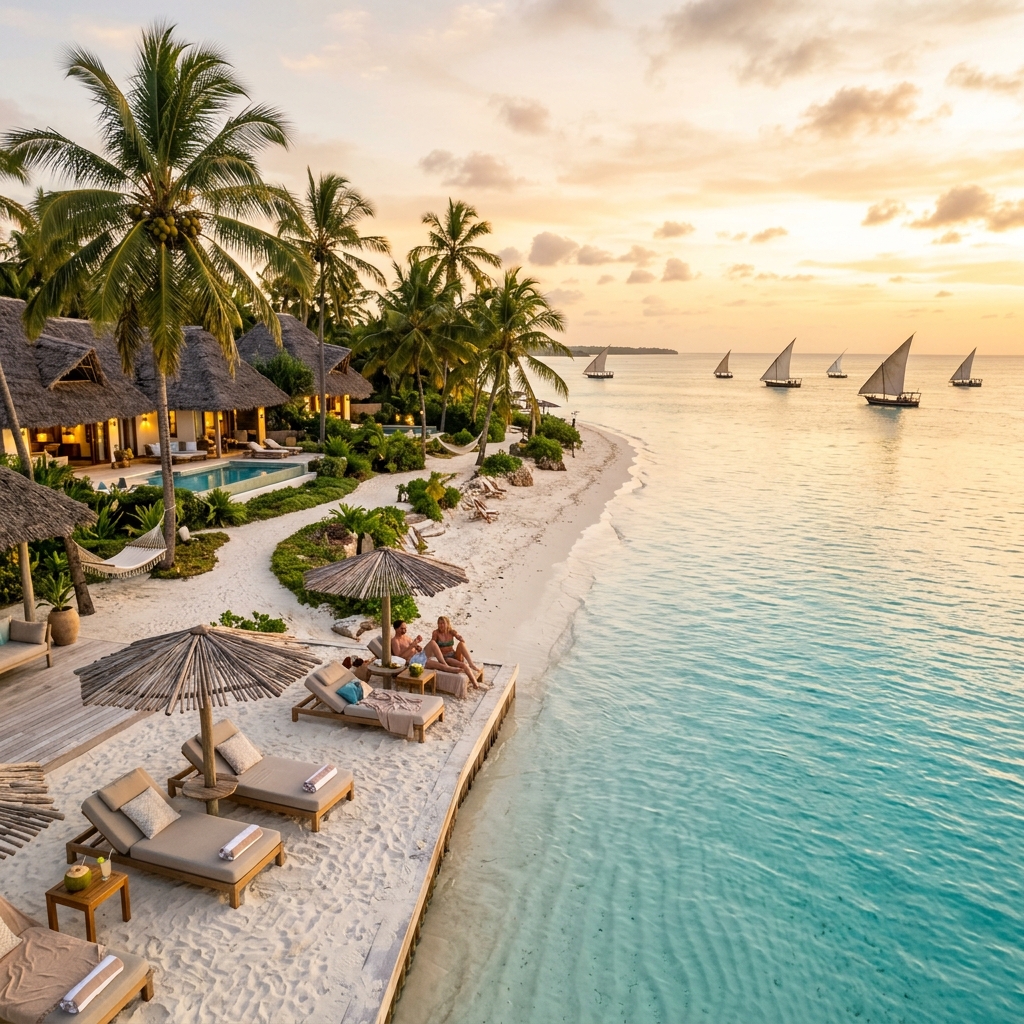
The turquoise waters and soft sands of Zanzibar provide the ultimate post-safari retreat.
After dusty days bouncing along savannah tracks, there is no finer conclusion to an African adventure than boarding a ninety-minute bush flight to Zanzibar Island. Here, you can wander the ancient labyrinthine coral-stone alleys of Stone Town, explore fragrant clove and vanilla plantations, and unwind on the powdery white-sand beaches of Nungwi, Kendwa, or Paje along the Indian Ocean.
12. Practical Travel Logistics: Health, Visas, Currency, and Connectivity
- Visa Requirements: Most foreign nationals require a tourist visa. You can apply online via the official e-Visa portal or obtain one on arrival at Kilimanjaro (JRO) or Dar es Salaam (DAR) airports. Check our Tanzania Tourist Visa Guide for full passport validity rules.
- Health & Prophylaxis: Consult your travel doctor regarding malaria prophylaxis (Malarone or Doxycycline). A Yellow Fever certificate is required only if transiting through endemic nations.
- The 2009 US Dollar Rule: Crucially, Tanzanian banks, hotels, and safari operators cannot accept US Dollar bills printed before 2009. Ensure all USD currency you bring is crisp, clean, tear-free, and dated 2009 or newer.
- Connectivity: Local SIM cards (Vodacom, Airtel) are available at airports. Most safari lodges offer complimentary Wi-Fi in their central lounges.
13. Five Common Planning Mistakes to Avoid
- Rushing the Itinerary: Trying to see Tarangire, Manyara, Ngorongoro, and the Serengeti in four days leads to exhaustion. Slow down and spend at least two consecutive nights in major parks.
- Chasing the Migration in the Wrong Region: Booking a camp in the southern Serengeti during August when the herds are three hundred kilometres north at the Mara River.
- Underestimating Morning Chills: Arriving with only shorts and t-shirts, only to shiver uncontrollably during 06:00 open-roof game drives.
- Packing Rigid Suitcases: Bringing massive hard-shell roller bags that cannot fit into safari vehicles or bush planes.
- Booking Through Disconnected Overseas Resellers: Paying hefty markups to international third-party booking agents who have never set foot in the Serengeti, rather than collaborating directly with an established local Tanzanian specialist.
Frequently Asked Questions
Is a Tanzania safari safe for first-time visitors and families?
Yes, Tanzania is consistently ranked among the safest, most politically stable countries in Africa. During game drives, you are accompanied by an experienced, licensed professional guide trained in wildlife behaviour. Inside safari lodges and tented camps, safety protocols are strictly enforced, including armed Maasai or ranger escorts who walk you to and from your tent after dark.
Can I see all of the 'Big Five' on a single Tanzania safari?
Yes. The Big Five—lion, leopard, elephant, buffalo, and black rhinoceros—can all be seen in Tanzania's Northern Circuit. Prides of lions, massive elephant herds, and African buffaloes are frequently spotted across Tarangire, Ngorongoro, and the Serengeti. Leopards are regularly observed lounging in acacia trees in the central Seronera valley. The black rhino is the rarest, with the enclosed floor of the Ngorongoro Crater offering your greatest statistical probability of a sighting.
What is the difference between a private safari and a group joining safari?
A private safari provides your party with exclusive use of a custom 4x4 Land Cruiser and your own dedicated professional driver-guide. This allows total flexibility over your daily game drive departure times, pacing, and wildlife viewing priorities. A group joining safari pairs solo travellers or small parties together to share vehicle expenses, operating on fixed schedules. Smashing Africa Tours specialises in personalised, private safaris.
What currency should I take to Tanzania for a safari?
US Dollars (USD) are widely accepted across Tanzania's safari industry for tipping, hotel bills, and major souvenir purchases. However, all US Dollar notes must be printed in 2009 or later, clean, and free of tears. It is also beneficial to withdraw a modest amount of Tanzanian Shillings (TZS) from an ATM in Arusha for purchasing fruit, local handicrafts, and small everyday expenses.
How far in advance should I book my Tanzania safari?
To secure top-tier naturalist guides and prime lodge accommodations inside the Serengeti and on the Ngorongoro Crater rim, we advise booking 6 to 9 months in advance. For peak travel windows—specifically the July–October river crossing season and the Christmas/New Year holidays—camps often reach capacity 9 to 12 months ahead of time.
Plan Your Tanzania Safari with Smashing Africa Tours
An authentic African safari should be inspiring, restorative, and seamlessly managed from the moment your flight touches down in Kilimanjaro until your final departure.
At Smashing Africa Tours, we take pride in being a native Tanzanian safari operator based in Arusha. Under the direct leadership of Anna Godfrey and our experienced team of naturalist guides, we craft tailor-made, private safari itineraries built entirely around your personal travel dreams, schedule, and comfort preferences.
Ready to design your custom safari?
Speak directly with our native safari planning team in Arusha for a personalized quote.
"Let Your Imagination Wander."
Smashing Africa ToursAbout Smashing Africa Tours
We write expert travel journals compiled by native safari planners and certified rangers in Arusha, Tanzania, ensuring your holidays are safe, authentic, and unforgettable.